Manufacturing EHS consulting
Manufacturing EHS consulting concentrates on the hazards that actually injure plant workers and draw OSHA emphasis inspections: machine guarding, lockout/tagout, powered industrial trucks, noise, and chemical exposures — plus the air, stormwater, and waste permits a production operation carries. It is Meridian EHS Partners’s largest practice.
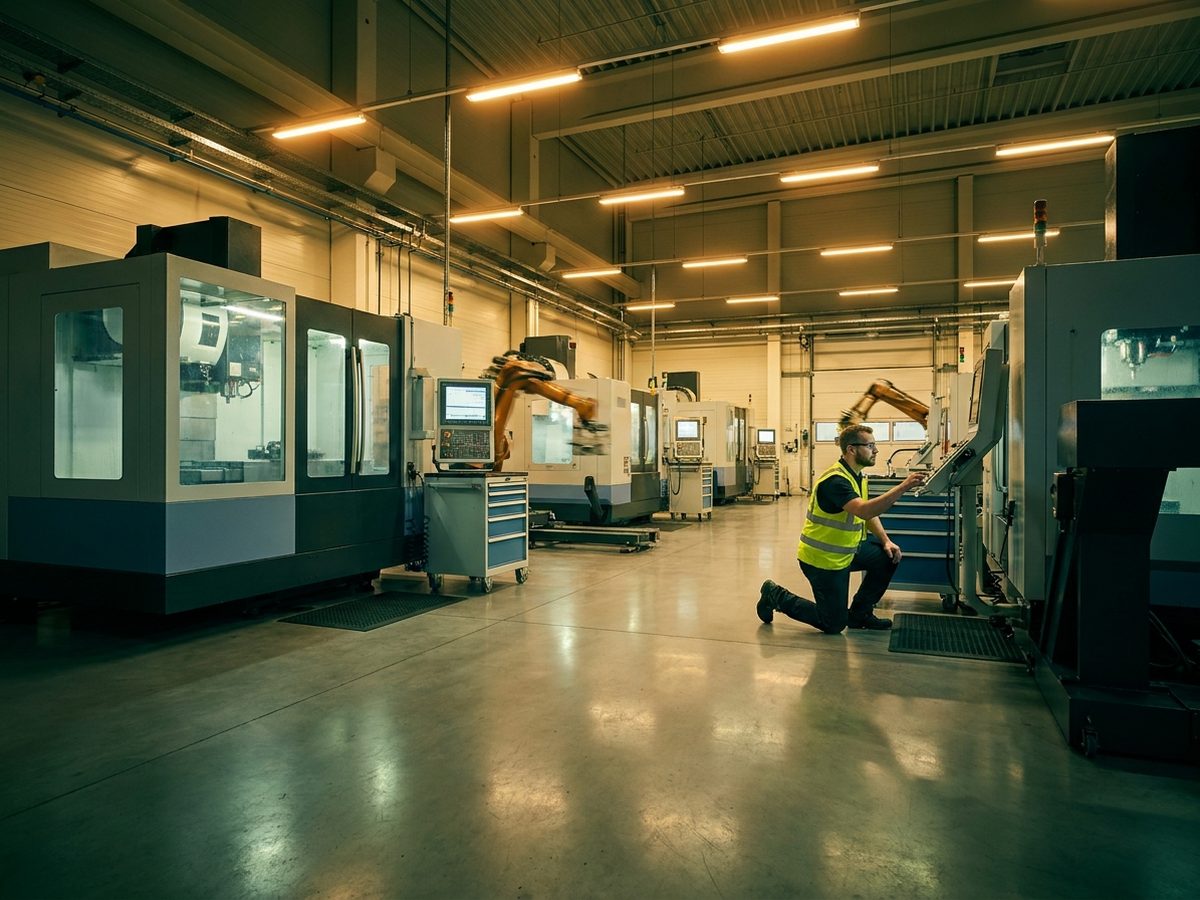
The mid-market manufacturing squeeze
Plants between 50 and 1,000 employees carry near-enterprise obligations — a dozen written OSHA programs, air and stormwater permits, customer EHS audits — with a fraction of enterprise staffing. The result we see on first walkthroughs is predictable: strong tribal knowledge, thin documentation, LOTO procedures that stopped matching the equipment two capital projects ago.
Our manufacturing practice is built for exactly that gap: fix the floor-level exposures first, then build the documentation system that keeps you inspection-ready without hiring a department.
What does OSHA target in manufacturing?
The National Emphasis Program on amputations names dozens of manufacturing NAICS codes for programmed inspections centered on machine guarding and lockout/tagout — the two standards that dominate manufacturing citation lists year after year, alongside hazard communication, powered industrial trucks, and respiratory protection. Any reported amputation, hospitalization, or complaint can trigger an inspection that starts at the incident and expands to whatever is in plain view. Our audits walk your floor in exactly that sequence.
What about the environmental side?
Production operations almost always carry environmental obligations that outgrow their paperwork: coating lines and combustion sources needing air permits, outdoor material handling triggering stormwater coverage, solvent and finishing wastes pushing RCRA generator status upward, and chemical inventories crossing Tier II thresholds. We run the whole stack on one compliance calendar — most plants are surprised how manageable it is once it is actually inventoried.
Typical manufacturing scope
- Machine guarding assessments line by line
- Machine-specific LOTO procedures and annual audits
- Amputation emphasis-program readiness reviews
- Forklift and crane/hoist programs
- Noise mapping and hearing conservation
- Welding fume and silica exposure sampling
- Air permitting and emission inventories
- Stormwater SWPPPs and waste generator compliance
- OEM/customer EHS audit remediation
- Fractional EHS management for plants without staff
Where to go next
Frequently asked questions
What is a good TRIR for manufacturing?
Recent BLS averages for manufacturing run around 2.4–3.0 depending on subsector. Customer audits commonly screen at 3.0; well-run plants operate between 1.0 and 2.0; world-class is under 1.0. More important than the number is the trend and the near-miss reporting behind it.
We just had an amputation / hospitalization. What do we do right now?
Hospitalizations must be reported to OSHA within 24 hours, amputations and eye losses within 24 hours, fatalities within 8. Preserve the scene, start the investigation, and call (614) 555-0142 — how the first 72 hours are handled shapes both the inspection and the abatement path.
Can you work around production schedules?
Always — audits and sampling are scheduled across shifts (off-shift exposure data is frequently where the real numbers are), and training runs in production-window blocks. We have done this for 12 years; we know better than to ask you to stop a line for a slideshow.
Do you support multi-plant groups?
Yes — standardized audit protocols across sites, one findings tracker, per-plant scorecards for the group leadership review. Multi-site fractional coverage is priced per facility with shared program development.