Healthcare and life sciences EHS consulting
Healthcare and life sciences EHS spans hazards most industries never see: bloodborne pathogens, patient handling injuries, hazardous drugs, lab chemicals, and regulated medical waste — under both OSHA and accreditation scrutiny. Meridian EHS Partners builds programs that satisfy the inspector and the surveyor with one set of documents.
The most injury-intensive industry most people think is safe
Healthcare consistently records more nonfatal workplace injuries than nearly any other U.S. sector — patient handling drives musculoskeletal injuries at rates rivaling heavy industry, needlesticks continue despite decades of engineered sharps, and workplace violence rates in healthcare far exceed the private-sector average.
Meanwhile EHS competes for attention with patient-safety and accreditation demands. Our approach: build one program architecture in which OSHA compliance and the Environment of Care requirements accreditors survey are the same documents, inspected once, maintained once.
What OSHA standards matter most in healthcare?
Bloodborne pathogens (1910.1030) — the exposure control plan, engineered sharps evaluations, hepatitis B vaccination, and post-exposure protocols that anchor most healthcare OSHA activity. Hazard communication for the chemical load of any clinical environment, plus specific standards for formaldehyde and ethylene oxide where they are used. PPE and respiratory protection — fit-testing programs that proved brittle under pandemic surge remain a compliance weak point. Add General Duty Clause exposure for workplace violence and patient handling, both areas of active OSHA attention in healthcare inspections.
What is different about life sciences and labs?
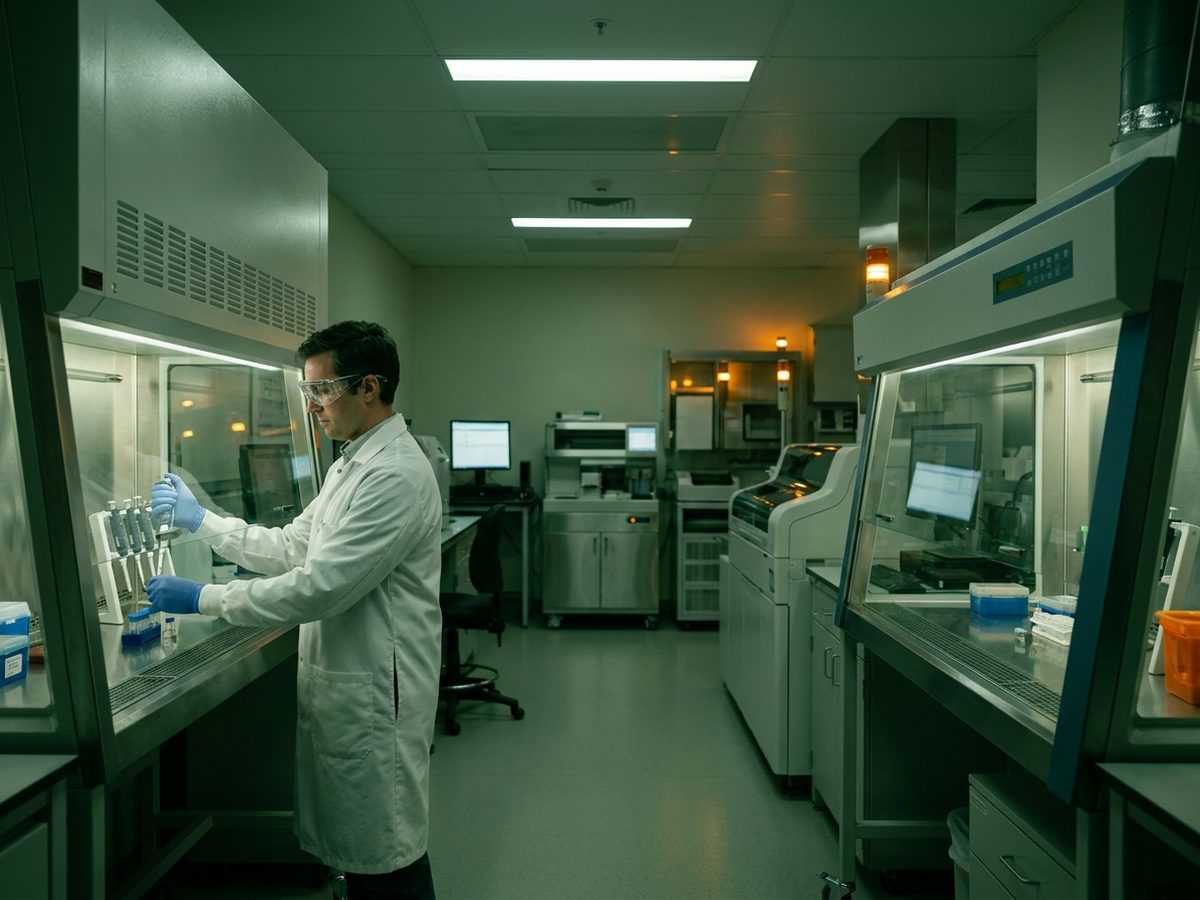
Laboratory operations swap the patient-handling profile for chemical hygiene (1910.1450) — a Chemical Hygiene Plan that reflects your actual inventory, fume hood verification, peroxide-former management — plus biosafety levels and IBC coordination for biological work, and hazardous drug handling to USP <800> in pharmacy and research settings. Waste streams multiply: regulated medical waste, chemotherapy waste, RCRA-hazardous pharmaceutical waste under Subpart P, and radioactive waste under license conditions. Getting the segregation architecture right is where both compliance and six-figure disposal savings live.
Typical healthcare & life sciences scope
- Exposure control plans and annual sharps evaluations
- Safe patient handling programs and equipment planning
- Workplace violence prevention programs
- Respiratory protection and fit-test programs
- Chemical hygiene plans and lab safety audits
- USP <800> hazardous drug gap assessments
- Regulated medical and pharmaceutical waste programs
- Environment of Care / accreditation alignment
- Emergency management and utility failure planning
- Fractional safety officer support for systems and clinics
Where to go next
Frequently asked questions
Does OSHA apply to medical and dental offices?
Fully — bloodborne pathogens, hazard communication, and emergency exit standards apply to the smallest practice, and complaint-driven inspections of small clinics are common. A right-sized compliance program for an office practice is measured in days of consulting, not months.
How do you work with our accreditation requirements?
We map OSHA obligations and Environment of Care/life-safety expectations into one document set, so surveyor prep and OSHA readiness are the same activity. Your safety officer stops maintaining parallel binders that drift apart.
Can you assess our USP <800> compliance?
Yes — gap assessments covering the assessment of risk, engineering controls, PPE, and staff training for hazardous drug handling in pharmacies, infusion centers, and research settings, with pragmatic sequencing for facilities constraints.
Who handles workplace violence prevention?
We build the program layer — risk assessment by unit, reporting systems, training, and post-incident response — coordinated with security and clinical leadership. With OSHA activity on healthcare workplace violence increasing, a documented program is both protection and defense.