Construction safety consulting
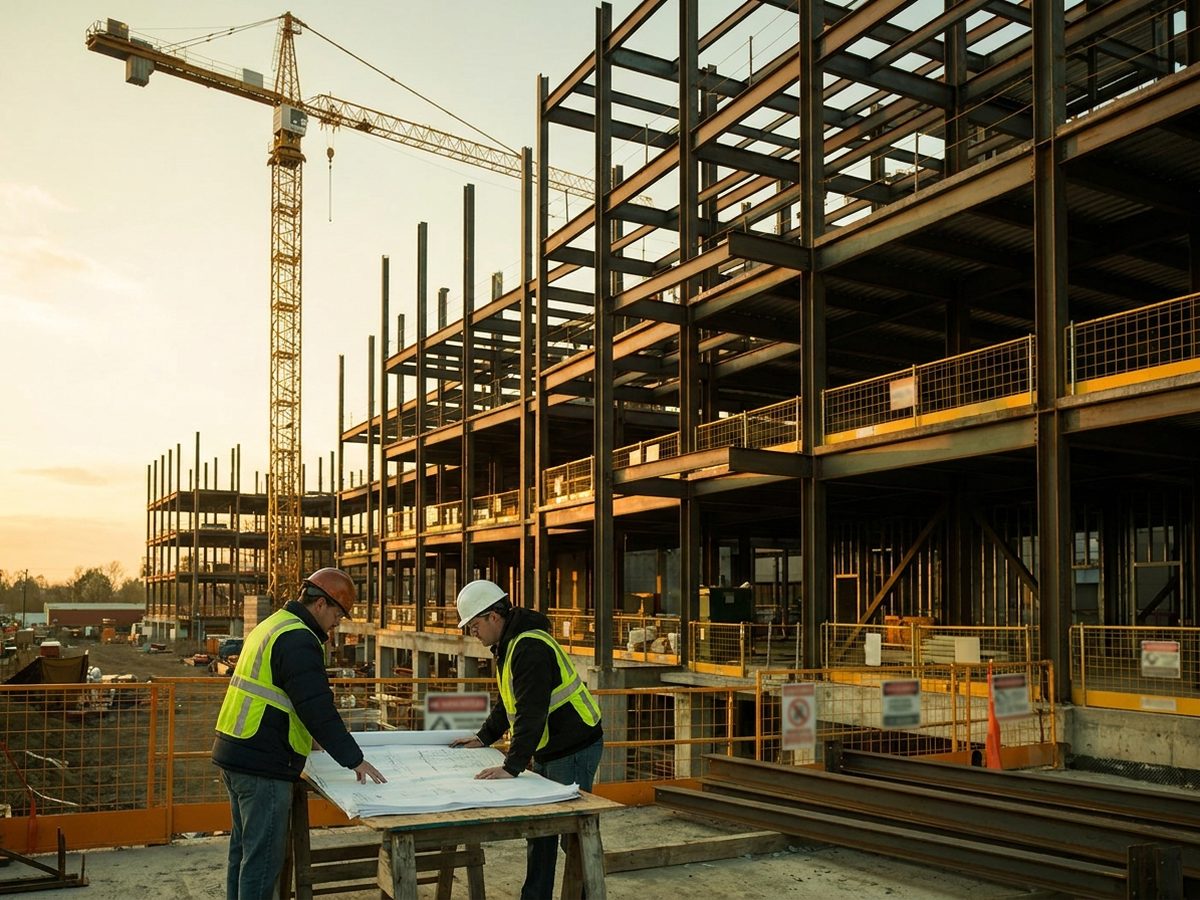
Construction safety consulting keeps crews alive around the Focus Four hazards — falls, struck-by, caught-in/between, electrocution — and keeps your TRIR and EMR low enough to win work, because GCs and owners now screen safety numbers before they read your bid. Meridian EHS Partners’s construction practice is led by people who came up in the field.
Safety numbers are bid qualifications now
A TRIR above 3.0 or an EMR above 1.0 quietly removes you from bid lists — many owners and GCs never tell you why. The contractors growing fastest treat safety statistics as a sales asset and manage them with the same discipline as backlog.
Our construction clients get both halves: the field work that prevents injuries, and the documentation, classification accuracy, and prequalification management (ISNetworld, Avetta, GC portals) that make the record visible to the people awarding work.
What does a construction safety consultant do?
Field-side: unannounced site safety audits with photo findings and same-day supervisor debriefs, site-specific safety plans that reflect the actual sequence of work, fall protection and rescue planning, excavation and crane oversight, and toolbox training that runs minutes, not hours. Program-side: your 1926-mapped written programs, competent-person designations and training, subcontractor safety qualification and flow-down enforcement, and incident response — including OSHA’s multi-employer citation policy, under which GCs and controlling contractors are routinely cited for subcontractor exposures.
How do we actually get TRIR down?
The pattern behind our 18-month TRIR turnaround case generalizes: make superintendents own safety with training and authority, run leading-indicator scorecards per project (inspections, huddles, near-miss reports), fix the recurring physical exposures (ladders, guardrails, housekeeping) that generate most recordables, and stop losing claims to late reporting. TRIR 4.8 to 1.2, EMR 1.21 to 0.84 — over 18 months, not 90 days.
Typical construction scope
- Unannounced site safety audits with same-day debriefs
- Site-specific safety plans (SSSPs) per project
- Fall protection programs and rescue planning
- Competent person training and designation
- OSHA 10/30 outreach courses for crews and leads
- Subcontractor prequalification and flow-downs
- Crane, rigging, and excavation oversight
- Silica exposure control plans and sampling
- ISNetworld / Avetta / Veriforce score remediation
- Contract site safety staffing for project coverage
Where to go next
Frequently asked questions
What are the Focus Four hazards?
Falls, struck-by, caught-in/between, and electrocution — the four categories that account for the majority of construction fatalities. Falls alone are the largest killer in the industry, which is why fall protection tops OSHA’s most-cited list every single year.
What TRIR and EMR do GCs require?
Common screens: TRIR under 3.0 and EMR under 1.0, with stricter owners requiring TRIR under 1.5 for high-hazard scopes. Prequalification platforms grade your written programs too — a strong incident record with weak documentation still fails.
Can a GC really be cited for a subcontractor’s violation?
Yes — under OSHA’s multi-employer citation policy, creating, exposing, correcting, and controlling employers can all be cited for the same hazard. That is why subcontractor qualification and documented site control are core scope in every GC engagement we run.
Do you provide full-time site safety coverage?
Yes — contract site safety managers for projects that require dedicated coverage, typically staffed within 2–3 weeks through our EHS staffing practice, backed by our practice leaders rather than working alone.